Timeline
From a blank screen to a battlefield on the table.
Nine weeks, thirty milestones, one very old game. Every entry says what changed and what you'd actually notice.
14 Aug 2026Day 1 of 65
Before all this
- 1998 Microsoft publishes Urban Assault, developed by TerraTools. It's odd, ambitious and unlike anything else, and a lot of us never got over it.
- Later The community keeps it alive: Marisa-Chan's OpenUA re-implements the engine as open source, and Metropolis Dawn becomes the fan home, with the deep history in its wiki.
- 2024 A first attempt to run it on a Mac dies on a blank screen. Filed under "later".
Port
-
Wave 1: it boots on a Mac
Urban Assault running natively on Apple Silicon, on the open-source OpenUA engine. A 2024 attempt had died with a blank screen; the cause turned out to be two things: no game data, and an engine that ignored symlinked folders. Both fixed, and the 1998 menu came up on the first try.
What you'd notice The original game, unchanged, running on a modern Mac.
OpenUA mac-port (unnamed)
-
Wave 2: readable at modern resolutions, full game plus Metropolis Dawn
macOS was snapping every classic screen mode to a giant panel mode, so the menu rendered microscopic. Logical resolutions fixed it and menu CPU dropped from about 70% of a core to 8%. The full campaign and the Metropolis Dawn expansion both boot, with MSAA, mipmaps and anisotropic filtering added.
What you'd notice Menus you can read, smoother edges, both campaigns.
OpenUA mac-port
-
Wave 3: controller, draw distance, first HD textures
DualSense support through the engine's own dormant joystick model, draw distance raised from 9 to 17 sectors for almost no cost, and the first upscaled texture pack. Lesson learned the hard way: UA re-palettes textures per level, so packs must be built per level.
What you'd notice Play with a PlayStation pad, see much further, sharper ground.
OpenUA mac-port
-
Waves 4 to 6: every level in HD, rumble you can switch off, LAN play
Per-level texture packs for all 200 levels (base, Metropolis Dawn, and every multiplayer map) with zero failures. Controller rumble was rebuilt for modern pads, then I switched the constant engine hum off by default, because after ten minutes it felt like holding a lawnmower. Multiplayer was automated and proven between two Macs over a private network.
What you'd notice HD textures everywhere, a 'Constant Engine Vibration' checkbox, multiplayer between our own machines.
OpenUA mac-port 0.5
-
Waves 7 and 8: crisp UI text and HUD
The whole 2D layer was being drawn at 640x480 and stretched. Text is now rasterised at full resolution, and the HUD and menu tile sheets got a 3x pack. Every wave so far was archived as a runnable build.
What you'd notice Sharp menu text and HUD at any resolution.
OpenUA mac-port 0.5 · Urban Assault Classic 0.5 (frozen)
Reforged 0.6
-
Wave 9, the AI wave: Urban Assault Reforged 0.6.0
The game got its new name. 46 hard-coded numbers from the 1998 enemy commander became tunable, a sector influence map now steers where the AI attacks and defends, and radio chatter arrived in the game's own message ticker (84 hand-written lines). The original 0.5 build was frozen and kept safe beside it.
What you'd notice A smarter enemy commander and squad radio chatter. 'UA Reforged 0.6' on the title screen.
Reforged 0.6.0 · Classic 0.5
-
Wave 10: proving the AI is smarter, killing the shimmer
21 recorded A/B runs across six contested levels showed the new commander really behaves differently in the designed direction (one honest null result kept). An AI-written radio mode was tested and rejected: too slow, worse prose. Distant ground shimmer turned out to be texture filtering that had been silently off since wave 2.
What you'd notice Data behind the 'smarter AI' claim, and calm, stable ground in motion.
Reforged 0.6.0
-
Wave 11: all 12 FMVs restored
Every full-motion video restored with the original voice-over, after a bake-off between upscalers (SeedVR2 won on quality and stability). New toggles: Modernised Videos, Fullscreen Movies, and Wall Signatures. The HUD digits were decoded from the authentic font.
What you'd notice The intro and mission videos, cleaned up, with a switch back to the originals.
Reforged 0.6
-
Wave 11.1: the second-map bug
Graphics went strange after playing one map and starting another. The cause was an inherited render cache that kept deleted textures. Fixed, with a reproduction harness so it stays fixed.
What you'd notice No more corrupted textures on your second mission.
Reforged 0.6
-
Installers built (and parked)
An unsigned Mac app (arm64, macOS 11+) and a per-user Windows installer were built and tested, including a full install-play-uninstall on a Windows gaming PC. They bundle the game data, which is Microsoft's, so nothing was uploaded.
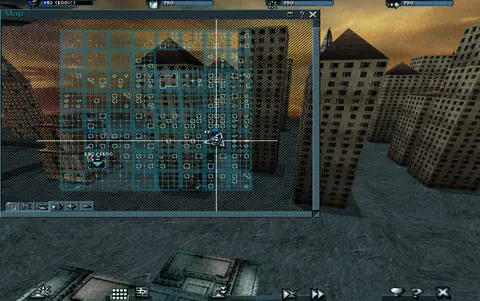
What you'd notice Proof it can be packaged for Mac and Windows. Public release waits on a 'bring your own game' version.
Reforged 0.6.1 (package label)
Reforge
-
Reforge begins: the Eisenhans pilot
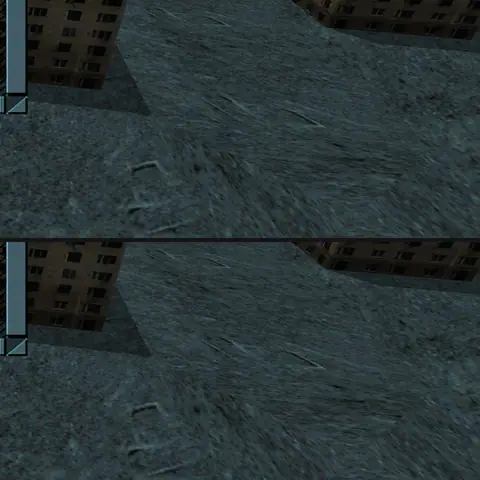
Plan agreed: a faithful remaster. The 1998 model sets the shape, a concept sheet sets the detail level, and the original governs how a unit reads from the commander's distance. The first unit, the Taerkasten Eisenhans, went through nine versions. I overruled the reviewers twice and the rule for everything after came out of it: battle-worn realism, never toy-clean, no camo patches.
What you'd notice The first remastered vehicle, and the look that every later unit follows.
Reforge pilot
-
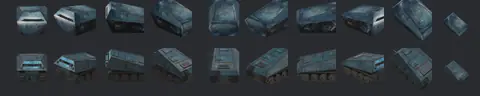
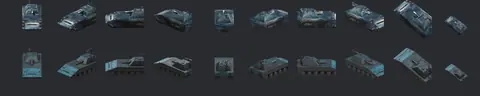
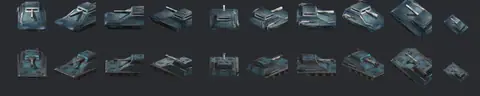
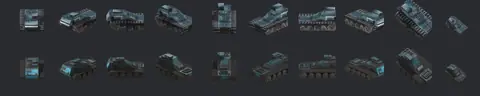
Batch 1: Wiesel, Jaguar, Tiger, Fox
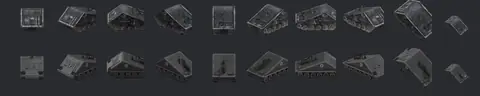
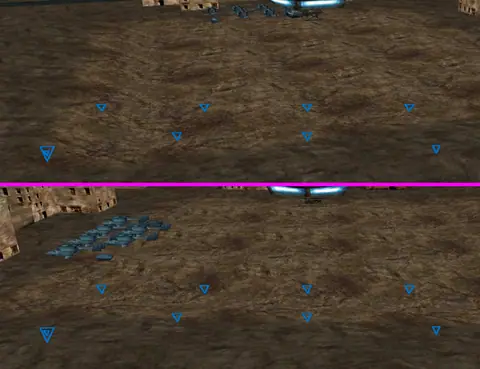
Four Resistance tanks with real running gear (road wheels, sprockets, one continuous track) inside the original silhouettes, and the weapon each one fires now visibly mounted. The blind reviews split, so I lined up v4, v5 and v6 and picked v6. 17 test games in real levels: no crashes, frame time unchanged.
What you'd notice The first HD tanks driving in real campaign levels.
Reforge batch 1 v6
New Look
-
First drive in the new tanks; the New Look edition is born
My first proper drive in the new tanks: it looked really good and the frame rate held. So the list grew: the rest of the vehicles, the buildings, the host stations and the floor. The game split into two versions kept in sync: Reforged (frozen, with AI radio) and Reforged New Look, which gets every visual update.
What you'd notice A separate 'New Look' edition, so the classic Reforged stays untouched.
Reforged 0.6 (frozen) · New Look r1
-
Trailers made, then parked
Three 30-second intro trailers were tried: one fully AI-generated, one rendered in Blender from the real remastered tanks, and a hybrid. The Blender one won easily, for the realism and the burn-through reveal from old to new. All three were parked so we could get back to the game itself. None of them is shown here.
What you'd notice A trailer exists. It needs a re-cut before it can go public.
-
All 14 Resistance units in New Look
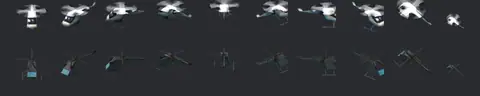
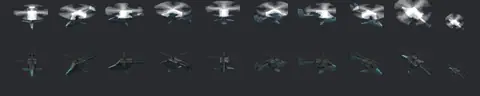
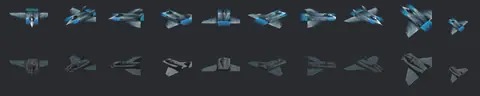
Helicopters, jets, the bomber, the drones and the buggy joined the tanks, with an air-specific version of the battle-worn look. The first pilots for the other factions (Ghorkov, Taerkasten, Mykonian) came out with per-part colours sampled straight from the originals.
What you'd notice Every Resistance vehicle is remastered.
New Look 2026-10-06
-
Faction rollout, buildings pilot, twelve look calls
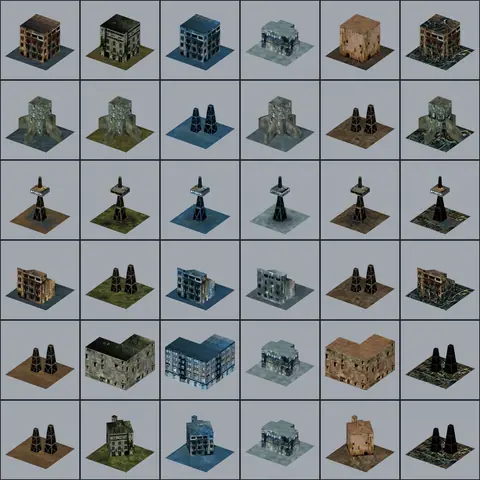
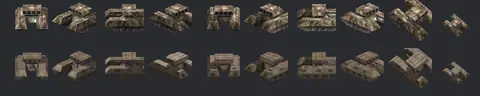
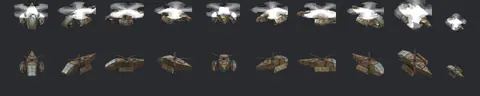
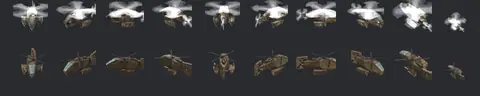
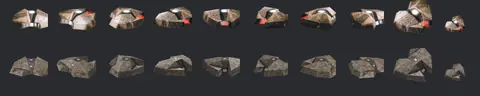
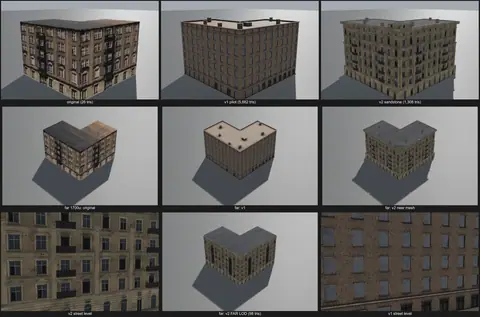
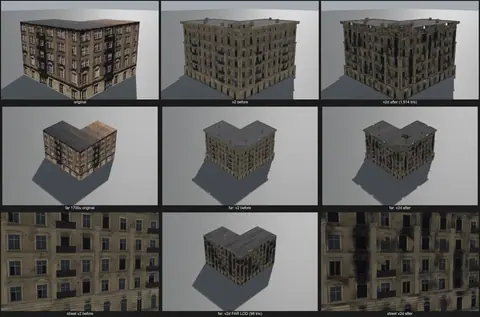
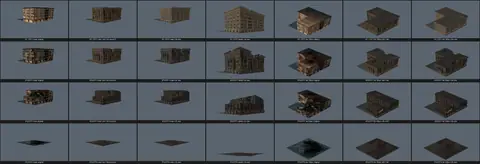
Ghorkov, Taerkasten and Mykonian units built in parallel. The buildings work started: about 400 building meshes across six sets, a separate shape per set, and the CITY1 apartment block as the pilot. I settled twelve look questions in one sitting. The first answer: go even more worn.
What you'd notice Other factions arriving, and the first remastered building.
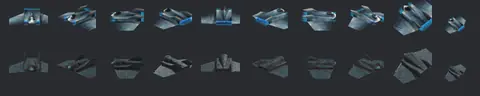
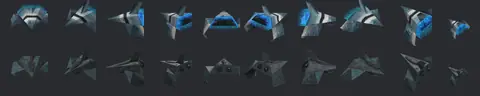
VR
-
VR P0 to P2: a Quest 3 build
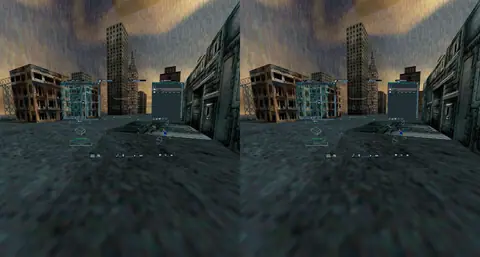
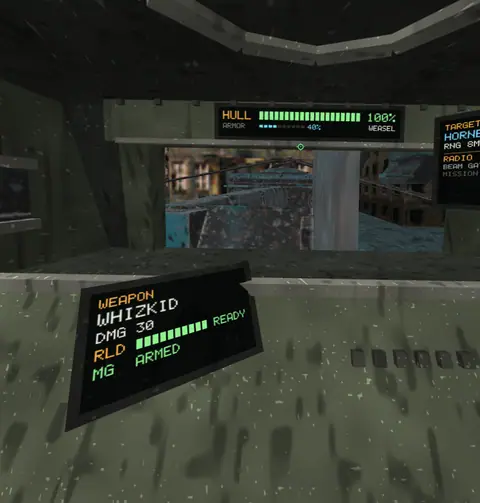
A separate VR edition, running natively on the Quest 3 inside our own engine (the Team Beef way, no PC needed). Stereo rendering, your head inside the vehicle camera, the HUD on a panel. VR off stays byte-identical to the flat game.
What you'd notice Urban Assault in a standalone headset.
VR proof
-
VR P3: first play in the headset, comfort and aim
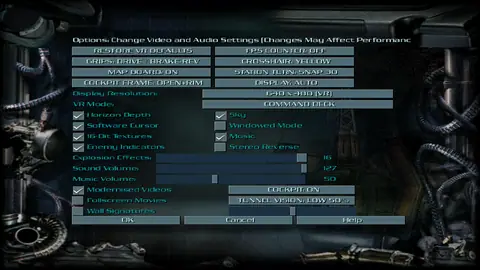
First play in the headset: the visuals held up, but there was vertigo, the crosshair was off, and vehicles looked enormous. P3 fixed that: a level horizon, a bump filter, tunnel vision you can set, a world crosshair on the gun's real ray, a laser pointer, and a smaller world scale. We also learned that Meta's store won't list Urban Assault (it's Microsoft's IP), so VR is sideload-only.
What you'd notice Comfortable VR with an adjustable vignette.
VR P3
-
VR P4 and P5: 41 to 120 fps
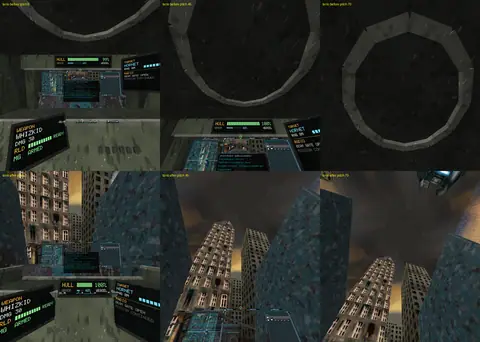
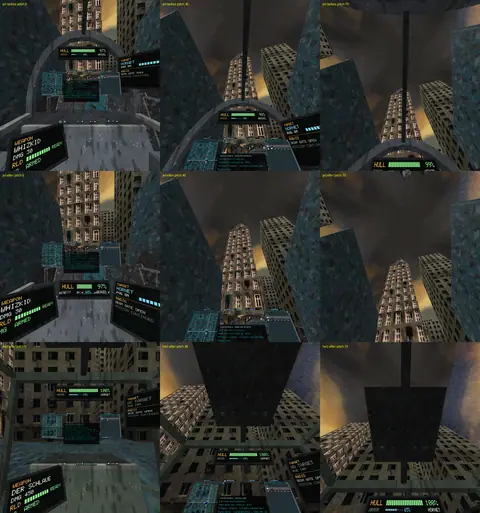
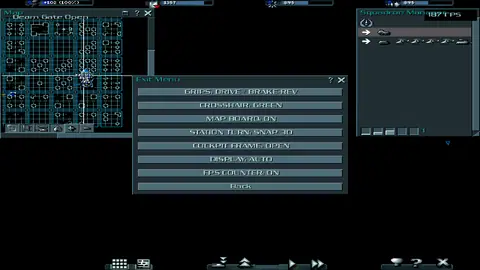
Open cockpits with a clear sky above, grip driving, graffiti baked out, and a big performance push: the scripted Quest benchmark went from 27 to 49 fps up to a locked 120. A pause panel now opens anywhere, with settings, controls and an FPS meter.
What you'd notice 120 Hz on a Quest 3, open cockpits, a proper pause menu.
VR P4 · VR P5
-
VR P6 merged, P7 Command Deck
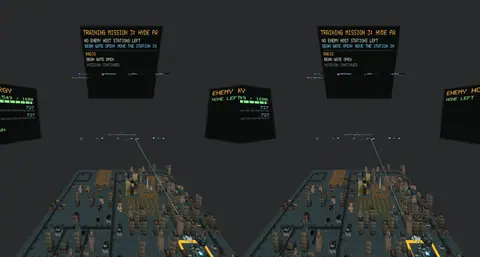
Open-plus-rim cockpit as default, automatic refresh-rate step-up, a yellow crosshair, restore-defaults. Then P7: one app with two VR modes, Classic and Command Deck (war table, two-click orders, radio on the wrist). Honest verdict after playing: the little token war table didn't add much.
What you'd notice Choose Classic VR or a commander mode.
VR P6 · VR P7 Preview
-
VR P8: the living diorama
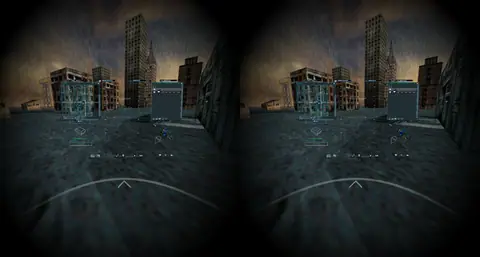
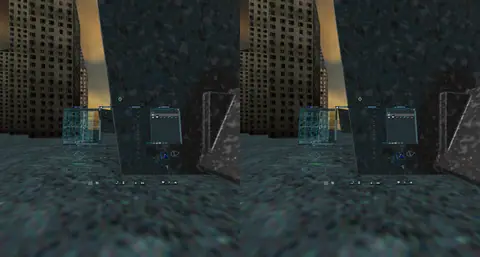
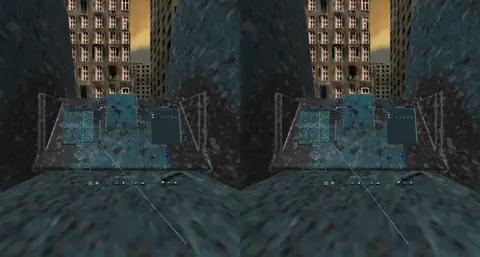
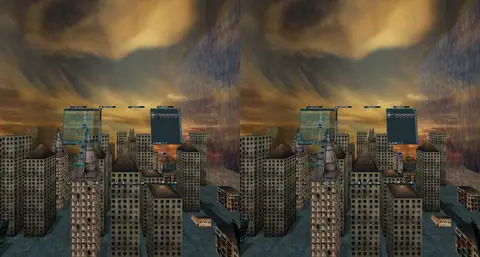
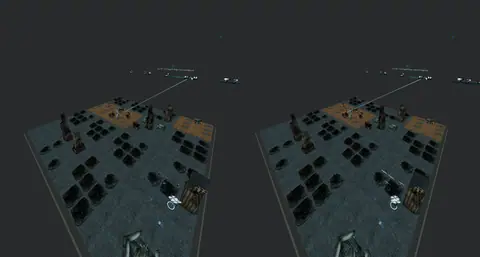
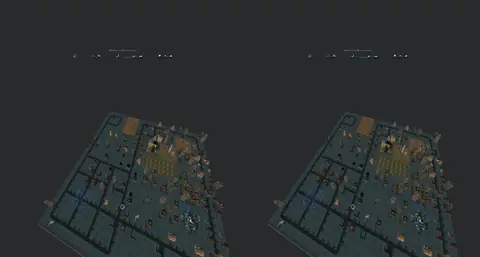
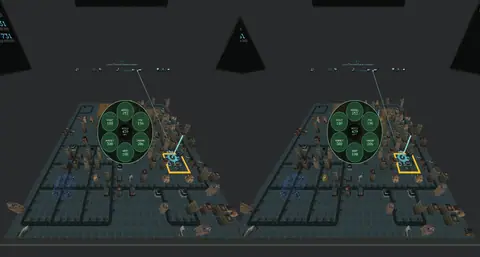
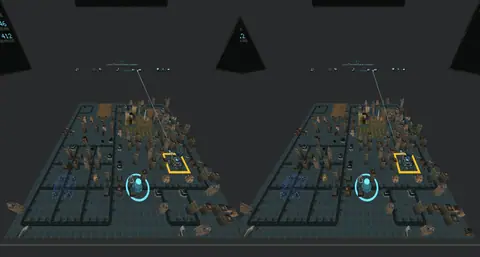
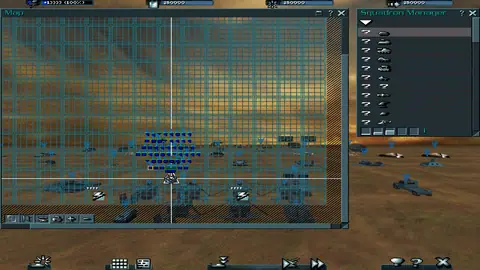
What I really wanted was the actual little vehicles fighting on the actual map, on an actual table. So the real terrain, buildings and units are drawn as a miniature on your real table through Quest passthrough. You can grab a unit and dive into it. Verdict in the headset: great.
What you'd notice The battle in miniature on your coffee table, then jump into any tank.
VR P8 Preview
-
VR P9 and P10: big maps, movable panels, build by hand
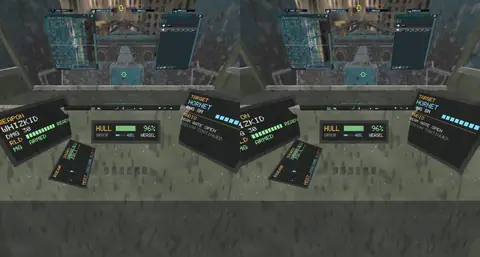
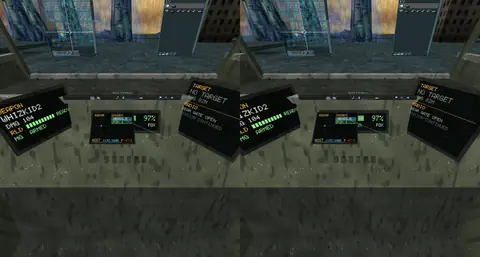
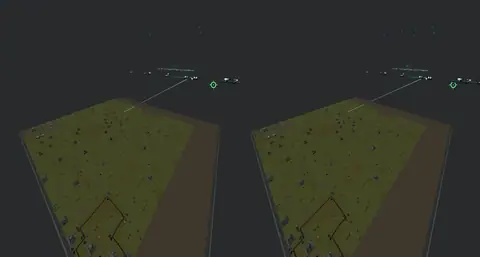
Static sector batching took the biggest map from 25,000 draw calls (1 fps) to 479 at 120 Hz. P10 added a quick return to the host station, a death prompt, HUD panels you can move and resize, bridge screens floating in your room, and building units by hand on the miniature. P10 is waiting for its play test.
What you'd notice Every map fits on the table; build squads with your hands.
VR P9 (merged) · VR P10 Preview

New Look
-
Rework round 1: aliens lose their guns, buildings get damage
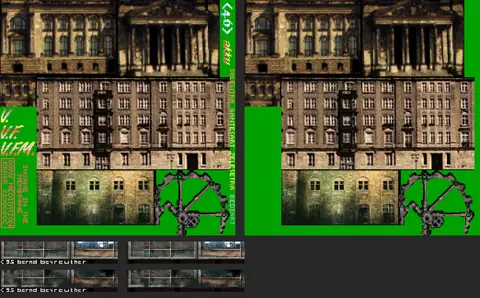
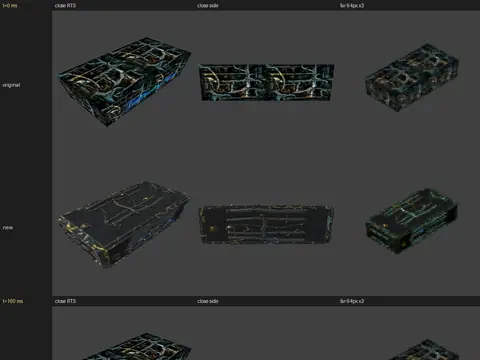
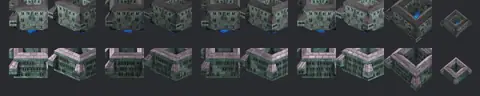
A check of the originals showed Mykonian and Sulgogar ships carry no visible barrels, so the human-style guns came off (the Black Sect keeps theirs). CITY1 got sandstone ornament, then damage you can read at play distance, because the first pass was far too polite.
What you'd notice Aliens that look alien again; buildings that look like a war happened.
-
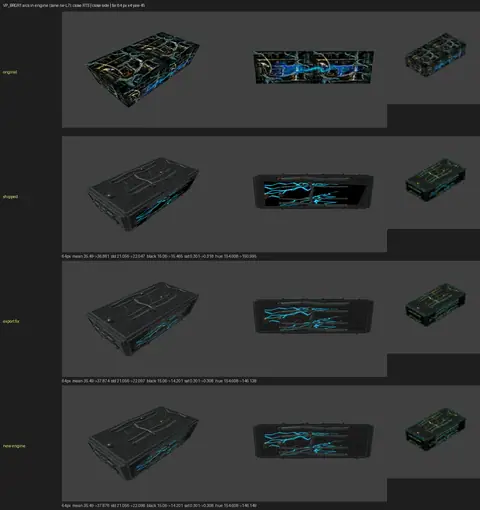
Rework rounds 2 and 3: yellow veins, living arcs, a whiter host station
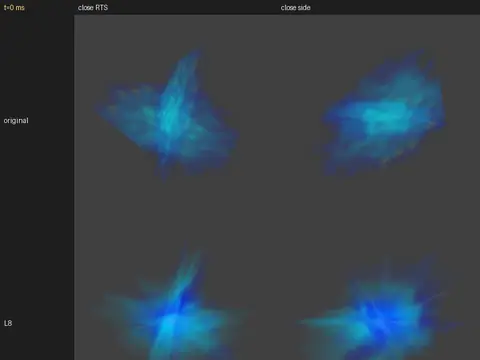
Aliens got back the yellow and whitish glow of the originals, with a faint blue tint on some white parts ('perfect'). The electric blue around them now moves and flickers in game. The Resistance host station got white plates, painted stripes and a dish you can see. Buildings got a proper sun side and window glints.
What you'd notice Electricity crackling over the alien ships; a host station that looks like the box art.
New Look
-
Surface v5 on every unit, and a showroom
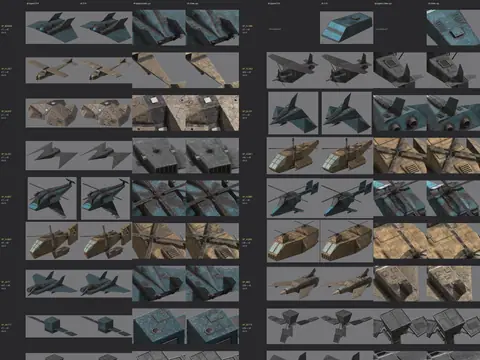
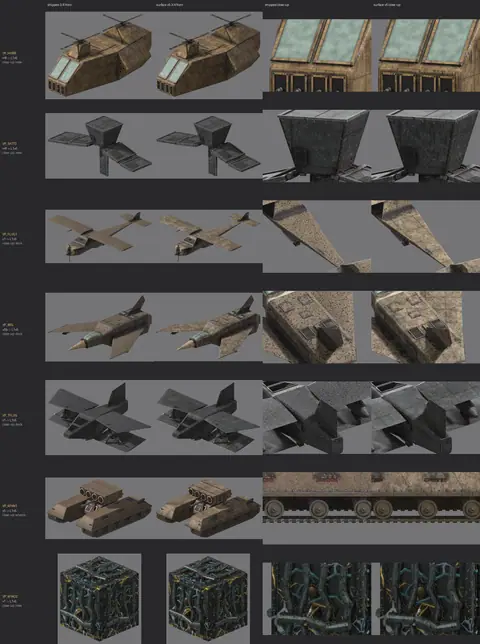
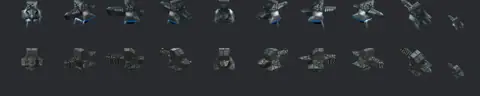
One shared wear layer, pushed further, rolled out to 44 units and published in steps (r6 to r8). A showroom level parks 51 vehicles from every faction so you can walk around them.
What you'd notice The whole roster in one consistent battle-worn finish.
New Look r6 · r7 · r8
-
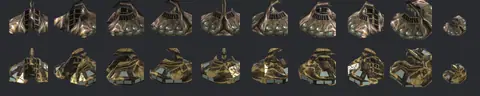
Sulgogar and host stations
The Sulgogar arrived: khaki skin, yellow veins, glowing pulsing tendrils. All host stations joined New Look, including the Black Sect station and the train.
What you'd notice Every faction's host station remastered.
New Look r9 · hosts release
-
Host stations r3 and effects r11 live; the floor arrives
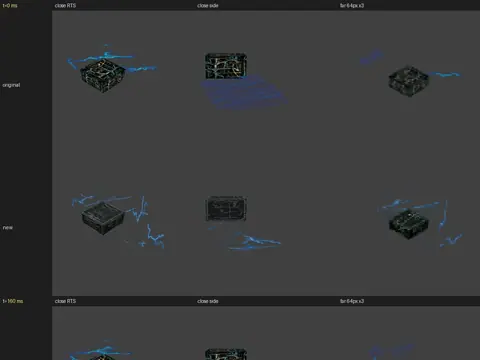
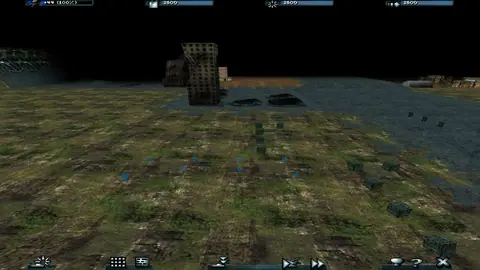
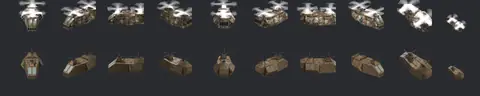
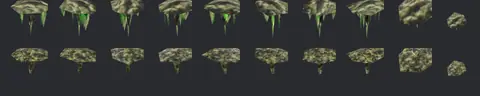
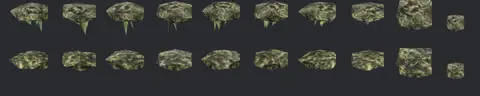
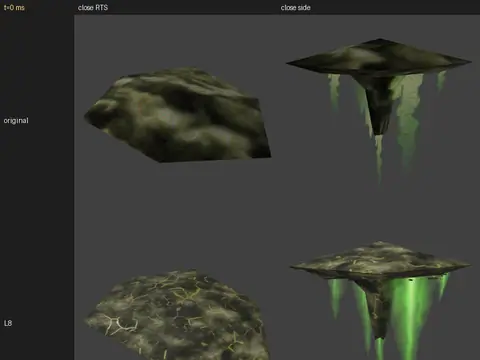
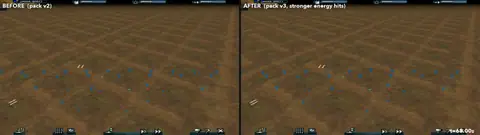
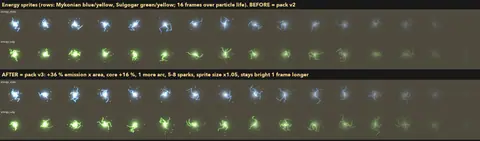
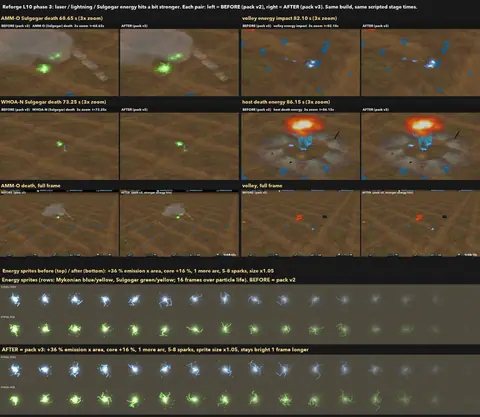
Ghorkov's station got its chrome shine, Taerkasten's stone a touch whiter. The effects pack went live: stronger laser and lightning hits, softer smoke, a faint ground light, measured at 0% frame-time cost on an M2 Max. The new floor was shown in clips and the strong detail setting won.
What you'd notice Better explosions today; a detailed floor coming with the presets.
New Look 2026-10-15 08:03
Graphics wave
-
Graphics wave: everything switchable
The rule for the graphics wave: do all of it, but every piece must switch off cleanly, VR stays standalone, and nothing bloats. Every new feature gets levels and joins presets: Original (exactly 1998), Low, Medium, High (today's New Look), Ultra, and VR. There's an in-game graphics menu and a first-launch benchmark.
What you'd notice One menu that goes from pure 1998 to everything on.
graphics settings
-
Shadows, glow, new skies, real building geometry
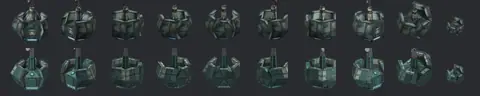
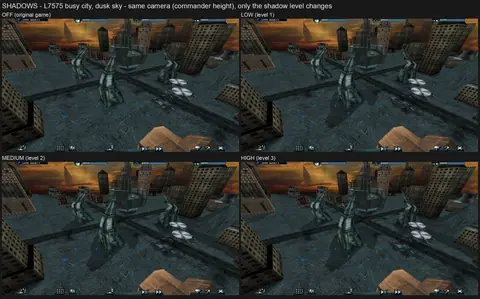
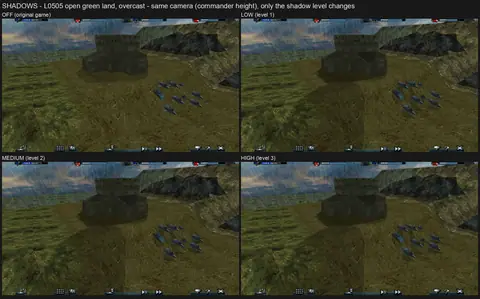
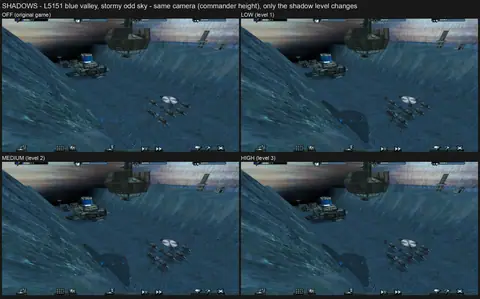
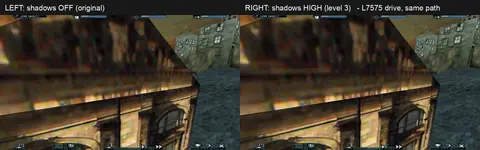
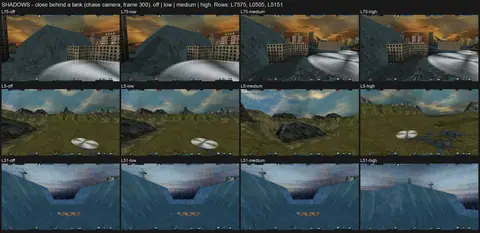
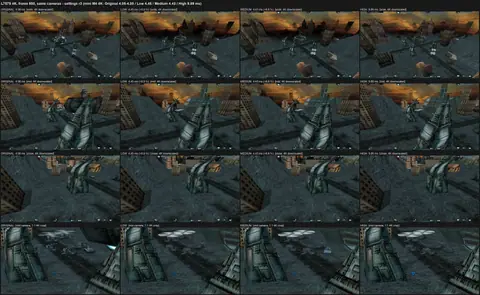
The integrated build passed every check: Original matches 1998 pixel for pixel, High matches New Look, and HD models now load only for the units a level uses (load 9 s down to 6.3 s). Shadows, glow, a four-sky pilot and rebuilt towers went out as review sheets.
What you'd notice Soft shadows, glowing fire and energy, painted skies, towers with real depth.
INT1 (staged)
-
Cheaper Low preset, trails, battle marks, sharper menus, 38 answers
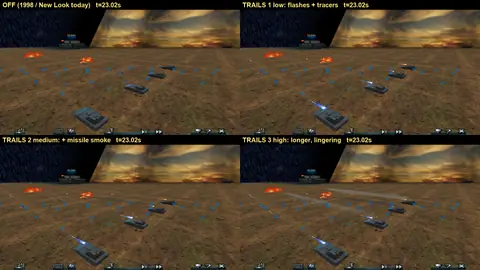
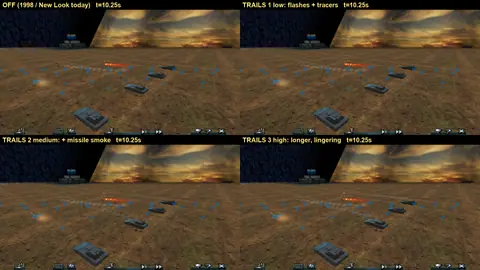
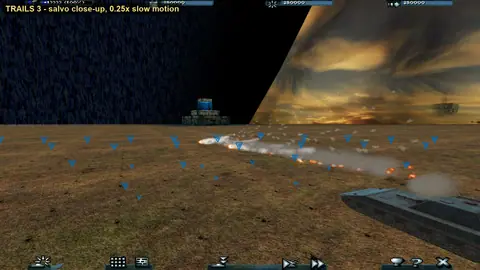
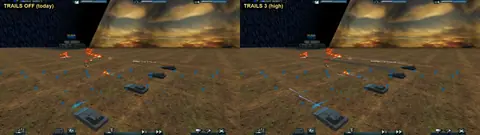
Low and Medium were costing too much at 4K because of the upscaled UI layer, so it's off there now. Muzzle flashes, tracers and missile smoke (1998 had none), scorch, craters and wreck smoke that fade after six minutes, and rebuilt menu art. Then 38 review questions answered in one go: a lighter host-station shadow, more glow at higher levels, towers that are still too clean and flat, and modern rebuilt icons in place of the AI-upscaled ones.
What you'd notice A full graphics menu taking shape. Next: the fixes from that review, then the sky.
settings r3 (built)
Next up: the fixes from the latest review, then the sky rollout and one graphics-presets build. Follow along in Updates.